| ../titles/t_bet.gif |
|
|
|
|
|
| Resources for Research & Writing |
|
|
Tips on doing a P.A.:
N.b. In preparation for the P.A. assignments you may want to skim Haddon Robinson's "The Heresy of
Application" in Leadership Journal 18 (1997) 20-27 (Check under "Readings" tab)

Tips on doing an Interactive Review:
If you want to brush up on exegetical method, you may want to consult Walter Kaiser's Toward an Exegetical Theology referred to in the syllabus.
The presentation of your finished product for this assignment must be organized as follows:
1 Present the "big idea" of the passage (i.e., what is the author's main point?). N.b., although this is first item in your presentation, you will have arrived at it as a result of the steps of exegetical analysis you will present next. The "big idea" should be stated in a single sentence. This is your "thesis statement." You will want to flesh out this "thesis statement" very concisely from key evidence you will have developed below. (a paragraph or two).
2 Next, present your analysis of the context of the passage. Use quality resources appropriate to graduate research & writing. Use footnotes as appropriate in this section. There are two aspects you will want to treat in a page or two:
2.1 Historical-geographical context: Present your own analysis of "time-space" data from the text in context, from related biblical texts, and from extra-biblical primary sources. State how this data enhances one's understanding of the passage. Helps in identifying sources (biblical and extra-biblical) include dictionaries, encyclopedias, histories, and technical commentaries.
2.2 Literary context: Present your own analysis of how genre influences the reading; how the passage relates to its immediate context (surrounding paragraphs/chapters) and to the whole book; your analysis of the division of the composition into units of thought (paragraphs or strophes) and your analysis of the contextual clues that indicate why this passage is located where it is(-- what is the flow of the author's "argument?"). You need not consult commentaries for this step.
3 Now present your own analysis of the text itself. This is the bulk of your presentation.
3.1 Paragraph analysis. State the "big idea" of each paragraph or strophe in one sentence each. This may be a topic sentence taken directly from the text or your re-statement of the paragraph's theme. Be sure to provide solid evidence. You need not consult commentaries for this step.
3.2 Sentence analysis. Identify and discuss important features of individual sentences. Avoid merely paraphrasing on the one hand, and unnecessary comment on the other (don't analyze the obvious). You do want to discuss your analysis of the flow of the author's treatment of the subject: what is he emphasizing? How does he argue his point? Are there particular stylistic matters worth noting? How is the author using imagery, developing plot and characterization, for example? Are there clues as to why he selected certain material or de-selected material the reader might have expected? Is he using terms that have acquired a technical meaning? Does he use terms or develop ideas that appear elsewhere in the book or in earlier biblical books? You may use concordances or electronic search engines as well as theological dictionaries here. Technical commentaries and journal literature will be useful in identifying issues in interpretation as well as in providing technical expertise. e.g., in linguistics. N.b., resist the temptation to depend on commentaries and do your own work here.
Further support for your analysis in this section will also be provided in an appendix containing 1.) a syntactical layout (clause-level diagram or "map") of the passage and 2.) an exegetical outline flowing from that layout. (see Kaiser, Toward an Exegetical Theology, chap. 8 for examples)
3.3 Theological analysis. Present the results of your analysis of the theological affirmations intended by the author for his audience. Demonstrate an awareness of the theology of antecedent Scriptures which inform this text.
4 Homiletical appropriation: How might you communicate this passage to an audience? For the purposes of this assignment you will present a one page summary which follows the pattern below.
Your presentation should be neatly "typed" with pages numbered . An 11-point font is preferred. You will not want to submit your first draft. Carefully proofread and edit your work. (See "Common writing Errors to Avoid")
It goes without saying that this is expected to be your own work. That said, you must give proper notice when quoting from another work, citing another work as authority, or using the original work/idea of another. You do not have to document common knowledge. Proper documentation must be provided for any sources used, including a separate bibliography of any works consulted at the end of the paper. Attention should be given to ensuring that sources and authorities used are appropriate to graduate-level work. Use "bibliography-style" footnotes rather than endnotes. As specified in the catalog, Kate L. Turabian's A Manual for Writers is the authority on matters of form and style.
As to be expected, your presentation must demonstrate an educated use of the English language. That being said, we do recognize that we have brilliant students whose mother-tongue is not English. In such case you may want to have a qualified person proofread your final (or next-to-final draft).
Whether dealing with prose or poetry, historical narrative or prophetic speech, the interpreter is concerned to analyze how the words are used in their context. This means looking carefully at the larger unit of thought (prose paragraph or poetic strophe) to see how meaning is developed from the clause level on to the paragraph level.
Identify and mark off the literary unit of thought (paragraph or strophe) and its topic topic sentence or proposition.
Identify and classify the constituent clauses (independent (main) clause, coordinate clause(s), and dependent (subordinate) clause(s).
Re-set the text so the syntactical features are more visible. Do not change the order of the text (relocate clauses)
1.1 The main components of the paragraph are set to the left margin. Each line will be comprised of a full clause.
1.2 Subordinate clauses are indented.
1.3 You may want to set multiple modifiers or multiple objects on separate lines directly under the word/phrase to which they refer.

Preaching Unit: Malachi 2:10-16
Provisional Title: A Call to be Authentic in My Family
Subject: Integrity
Complement: Relationships
"Big Idea" of the Text (stated as a "timeless principle"): One's relationship with their spouse affects their relationship with God and their witness for Him.
Sermon Proposition: An authentic, healthy, growing relationship with my spouse is mission-critical.
Interrogative: Why
Key Word*: Teachings ("keyword"=plural noun that refers to all main points)
Main & Sub-Points:
I. Marriage is sacred because God designed it v.15
A. God designed marriage to be one-for-one v. 15 (Gen 2:23-24; Mk 10.6-9)
B. God intended marriage to be believer-to-believer v.11 (2 Cor 6.14-18)
C. God intended marriage to be a witness v. 15b
II. Marriage is sacred because it is a covenant v.14
A. Meaning of biblical covenant
B. Sanctity of biblical covenant (Num 30.2; Eccl. 5.4)
C. God's perspective on violation of biblical covenant v. 16
III. Marriage is sacred because it is a picture of God's relationship
with His people
A. Model is selflessness, humility, compassion, responsiveness sacrifice (Hosea;
Eph 5)
B. Unfaithfulness in marriage relationship usually reflects spiritual unfaithfulness.
v.10-11
C. Unfaithfulness in marriage relationship impacts one's spiritual relationship
with God v. 11-13
Conclusion: v. 16b "So guard yourselves in your spirit, and do not break faith." Husbands & Wives - renew vows & revitalize relationships; Moms & Dads – ask God to keep you authentic as you model a life of faith & obedience, love & grace; Students – Seek God's direction in the choice of a life-mate and commit to marrying a believer; Congregation – pray for our families THAT TOGETHER WE MIGHT BE A CLEAR CHANNEL FOR BROADCASTING THE GOOD NEWS OF OUR GREAT KING (Mal 1.11, 14b)
| Why? Because of... | How? by... | When? |
arguments set out |
heeding admonitions choosing better alternatives overcoming barriers obeying commands avoiding dangers mastering details obeying directives avoiding excesses avoiding extremes practicing the fundamentals following the guidelines following the instructions obeying the laws practicing the lessons taking advantage of the means applying the methods overcoming the obstacles following the patterns following the plans appropriating the powers observing the principles taking the precautions making adequate preparations making use of the provisions following the rules following the steps following the stipulations obeying the teachings |
changes are taking place circumstances demand directions specify duties demand guidelines indicate ideals call for |
Who?
What?
Where?

 |
Primary SourcesTanach - Jewish Publication Soc. (1917) Tanach - Judaica Press (includes Rashi's commentary) Tanach - Verse analyzer of the TanakhML Project (www.tanakhml.org) New English Translation of the Septuagint NeXt Bible - NET Bible online text and tools OSIS Bible Tools - Parallel Hebrew/Septuagint/English tools Blue Letter Bible - Public domain resources (AV, Gesenius' Thayer) for primary text and links to versions and secondary resources (Treasury of Scripture Knowledge, commentaries, etc.) |
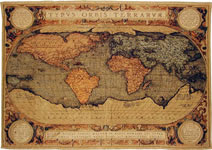 |
Historical-Geographical-Sociological ResourcesAn excellent Bible Atlas Online. The atlas is comprised of seventy-four maps oraganized in three parts: Biblical setting, Hebrew Bible Period, New Testament Era (including early church). |
|---|
University of Texas at Austin's Perry-Castañeda Library Map Collection includes an extensive collection of maps of the Near East, both recent and historical
MERIA (Middle East Review of International Affairs), published by Bar-Ilan University, sponsors this web site which provides links to an impressive array of map resources for study of the Middle East.
Columbia University site linking to Middle East regional and country resources
Bible History site provides an extensive array of links to historical-geographical backgrounds including archaeology and images.
Babylon web site includes historical notes and artists' conceptions of the city in the 7th cent. B.C.
Second Temple Synagogues is a site based on Donald Binder's 1997 Ph.D. dissertation at SMU.
NASA Jet Propulsion Laboratory space radar image shows Jerusalem and the Judean Wilderness, including Bethlehem and Hebron.
Cornell University's interactive mapping and geoscience data analysis home page provides direct access to Cornell's digital data sets and web-based application tool.
Old Testament/ Hebrew Bible Bibliography on Gender Studies/ Women in Antiquity
Contemporary "Exploration": Take a virtual
tour of the Middle East at virtualtourist.com
 |
Biblical Studies GlossaryA glossary of terms encountered in technical biblical studies material. |
 |
Bibliographies |
Annotated Old Testament Bibliography Prepared by Dan Carroll and Richard Hess of Denver Seminary and published in the Denver Journal (6) 2003 . For the most part, this list considers English language studies and exegetical commentaries that have appeared within the last quarter century and indicates those works which the preparers consider exemplary.
N.B., there is much of value that predates this period. For one of the most useful bibliographies of earlier works, see: Childs, Brevard S. Old Testament Books for Pastors and Teachers. Westminster, 1977.
American Journal of Semitic Languages and Literature
Andrews University Seminary Studies
Annual of the Swedish Theological Institute
Biblical Research
Biblische Zeitschrift
Bulletin of the American schools of Oriental Research
Canadian Journal of Theology
Concordia Theological Monthly
Currents in Theology and Mission
Grace Theological Journal
Hebrew Annual Review
Hebrew Studies
Horizons in Biblical Theology
Israel Exploration Journal
Journal for the Study of Old Testament
Journal of Biblical Literature
Journal of Bible and religion
Journal of Jewish Studies
Journal of Near Eastern Studies
Journal of Northwest Semitic Languages
Journal of the American Oriental Society
Journal of the Evangelical Theological Society
Palestine Exploration Quarterly
Princeton Theological Review
Reformed Theological Review
Review of Theology and Philosophy
Révue de Qumran
Scottish Journal of Theology
Studia Biblica et Theologica
Themelios
Theologische Zeitschrift
Union Seminary Quarterly Review
Westminster Theological Journal
Zeitschrift für die alttestamentliche Wissenschaft
In addition to the journals above which provide some measure of internet access, you may want to check out the following sites:
University of Chicago list of journals related to the ancient Near East, archaeology, or classics.
American Theological Library Association's Center for Electronic Resources in Theology and Religion (CERTR), a current project to digitize 50 years' publication of 50 key journals.
Biblical Studies Web provides access to libraries, e-journals, commentaries, etc.
Christianity Today's site provides access to CT, Leadership, Books & Culture, Christian History and other periodicals
Index to religious periodical literature. 1949/1952-June 1977.
Religion Index One, periodicals. 1949-1964, July 1977 to date.
RI 1 & 2 are the major current indices of religious literatureReligion Index Two, multi-author works. 1960 to date.
Electronic form of Religion Index 1 & 2 contains citations from international journal titles and 13,000 multi-author works in and related to the field of religion.
Catalog of multidiscplinary collection of some 600 journals.
Access to these databases and others iis available through the Seminary Library webpage.
Elenchus of Biblica. 1968 to date (1920-1968 in the journal: Biblica)This is THE most complete search tool, indexing almost every journal/serial/book/dissertation world- wide. What makes it especially valuable for biblical studies is its Scripture index. The downside is that it is about 3 year behind.Internationale Zeitschriftenschau für Bibelwissenschaft und Grenzgebiete. 1952 to date.
Old Testament Abstracts. 1978 to date.
Search across many disciplines and sources: peer-reviewed papers, theses, books, abstracts and articles, from academic publishers, professional societies, preprint repositories, universities and other scholarly organizations.
When doing research, pay attention to the institutional
sponsorship of the site (there are good independent sites out there, however,
usually a site sponsored by an institution is of higher quality than a site
offered by a single individual)
Depending on what the site is providing, watch for
evidence of active maintenance. For example, a site with a carefully prepared and proofread
text of Josephus does not need to be constantly "updated." However, other sorts of sites
which have not been updated in more than a year should be treated with care.
With respect to the kinds of sites we would be dealing
with in theological studies, the norm is free access. Sites which try to collect
money from users should be treated with care.
Is the author, editor of the material identified?
Is there some indication of his or her credentials? Does the site present well
(indicating some care in its preparation) or is it garish or poorly organized?
Has the material been prepared with care or are there errors in spelling and
grammar (e.g., "I hope to peek your interest in the main tenants of my moral principals
...")
Listserv Discussion Groups
Discussion groups exist on the internet in which
scholars from a particular discipline or sub-set of an academic discipline engage
in conversation and Q&A on topics germane to that discipline. There are
also listserv discussions which are interdisciplinary. As you confront particular
issues in theological studies, you may find it stimulating to check in on one
or more of these discussion groups.
Style
sheet explains types of electronic sources,
issues in citing electronic sources, examples, and links to style guides.
It’s a strong clue that a writer has let the spell-checker do her proof-reading for her when one finds...
"I" where it should be "me" and vice versa.
"it’s" where it should be "its"...
"your" where it should be "you’re"...
"they’re" where it should be "their"...
"then" where it should be "than"...
"who’s" where it should be "whose"...
"i.e." when it should be "e.g."...
"effect" when it should be "affect"...
"different than" where it should be "different from"...
"could of" (or "would of") where it should be "could have" (or "would have").
"lay" where it should be "lie"...
"imply" where it should be "infer"...
"good" where it should be "well"...
"compliment" where it should be "complement"...
"loose" where it should be "lose"...
"rather unique" or "very unique" where, if "unique" doesn’t say it all, it isn’t unique.
See Paul Brians’ Common Errors in English Usage
Turabian (Manual for Writers 7th edit.) suggests that if one is not careful when roughing out the first draft of a composition, one can unintentionally create an unfortunate situation that appears to be plagiarism. Turabian (7.9) observes that one is taking a risk when one gives "readers reason to think that you've doen one or more of the following:
...You risk a charge of plagiarism if you fail to use quotation marks or a block quotation to signal that you have copied as little as a single line of words."
So, a good rule of thumb is to mark and source another author's particular word or words as you rough out your first draft. And, if you have obtained specific information (unless common knowledge) or and original idea (concept, conclusion, methodology) from another, be sure to mark and source it.
You should not credit common knowledge (Jeremiah was born in Anathoth) to a secondary author/source but may want to provide a reference to primary sources. In a particular field (e.g., Hebrew Bible, N.T. Studies, etc.) there are facts and methodologies that, while perhaps not commonly known to "the person on the street," are "common knowledge" within the field (e.g. speech-act theory, documentary hypothesis, etc.) and a source need not be cited unless one is referring to an exception or debate. So, you need not cite a secondary source for a statement regarding Josiah's role in the revival UNLESS you are using the exact words of a secondary reference, in which case you must use quotation marks and cite the source.
Turabian (7.9.4) observes that "many students defend themselves by claiming that they didn't intend to mislead. The problem is, we read words, not minds. So think of plagiarism not as an intended act but as a perceived one. Avoid any sign that might give your readers any reason to suspect you of it."
 |
Searching for Used BooksWipf & Stock academic reprinter offers a 20% discount of retail price. |
 |
Hebrew
Language Learning Resources
|
The Hebrew Language site at the University of Minnesota
The Hebrew Language site at the University of Texas at Austin
Disclaimer: The inclusion of a link on this
site does not necessarily indicate an endorsement of the contents of that site
by this professor or institution. As always critical judgment is expected. Sites
are included which are deemed to be appropriate to graduate education.